 JD-STEEL
What is the difference between the spraying and vacuum plating processes? Which one is more durable?
In the field of architectural decoration and high-end home furnishing, colored stainless steel coils have become a popular choice for designers and contractors due to their unique visual expression and excellent corrosion resistance. However, many customers often wonder when purchasing: What surface treatment methods are used for colored stainless steel sheets or coils on the market? What is the difference between spraying and vacuum plating? Which process is more stable, has a longer-lasting color, and is more durable?
In the field of architectural decoration and high-end home furnishing, colored stainless steel coils have become a popular choice for designers and contractors due to their unique visual expression and excellent corrosion resistance. However, many customers often wonder when purchasing: What surface treatment methods are used for colored stainless steel sheets or coils on the market? What is the difference between spraying and vacuum plating? Which process is more stable, has a longer-lasting color, and is more durable?
As a supplier focusing on stainless steel deep processing solutions, Jasmine Stainless Steel will professionally analyze the core differences and applicable scenarios of the two processes for you.
1. What is colored stainless steel spraying?
The spray coating process mainly uses electrostatic spraying equipment to evenly cover the surface of stainless steel with polyester powder or liquid paint, and then forms a layer of colored protective film through high temperature curing.
Its characteristics are as follows:
· The process is relatively simple and the cost is low;
· The color selection is rich and the customization is high;
· The surface is a covering coating, which covers the texture of the metal itself;
· The wear resistance and corrosion resistance depend on the performance of the coating itself;
· Long-term use may cause problems such as paint peeling, powdering, and peeling.
Commonly seen in indoor scenes, signboards, and low-touch decorative pieces.
2. What is vacuum plating process?
Vacuum plating (PVD, Physical Vapor Deposition) is one of the most widely used high-end surface treatment methods in the processing of colored stainless steel decorative panels. This process achieves molecular-level adhesion and coloring by evaporating and depositing metals such as titanium and zirconium on the surface of stainless steel in a vacuum environment.
Its advantages are significant:
Strong adhesion, not easy to fall off, excellent scratch resistance;
Color saturation and uniformity, natural gloss;
Retain the original texture of the stainless steel body such as brushed, mirrored, sandblasted, etc.;
Stronger corrosion resistance, suitable for outdoor and high humidity and high salt environment;
Environmentally friendly process, no organic solvent emissions.
Currently, the black titanium brushed plates, rose gold mirror plates, champagne gold sandblasted coils and other products provided by Hengcai Stainless Steel are all processed by PVD vacuum electroplating and are suitable for various scenarios such as elevator decoration, curtain wall projects, high-end furniture and commercial spaces.
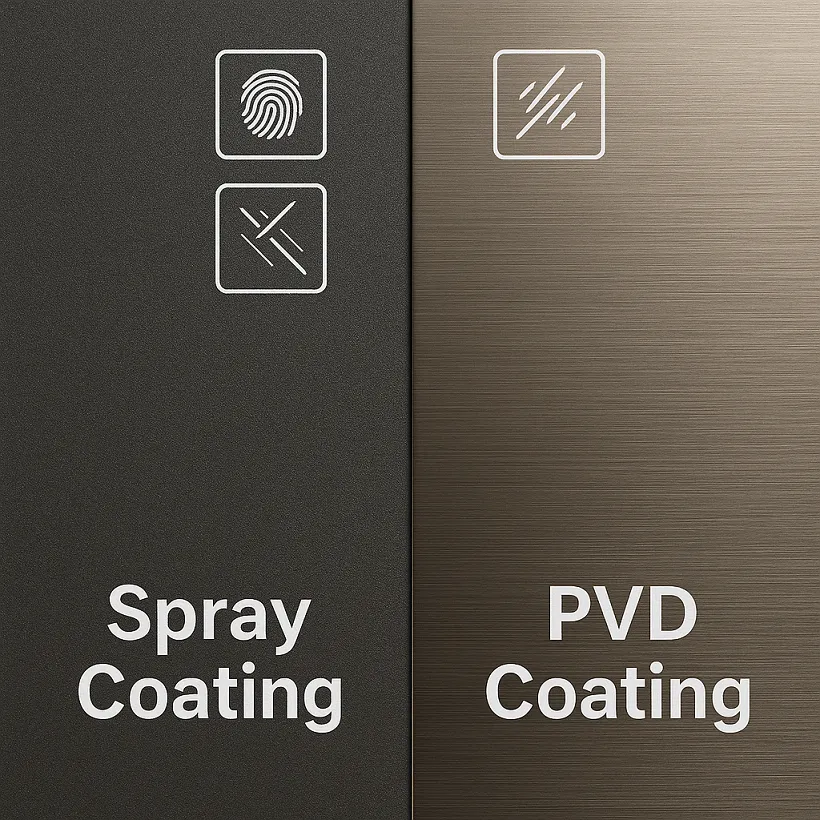
3. Durability comparison between the two: PVD is far better than spraying
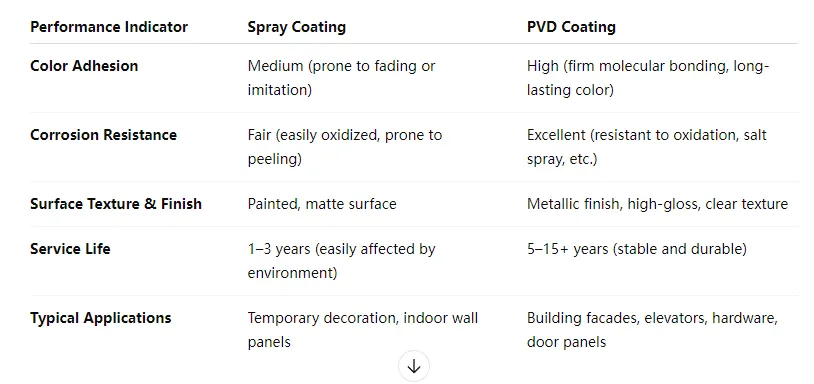
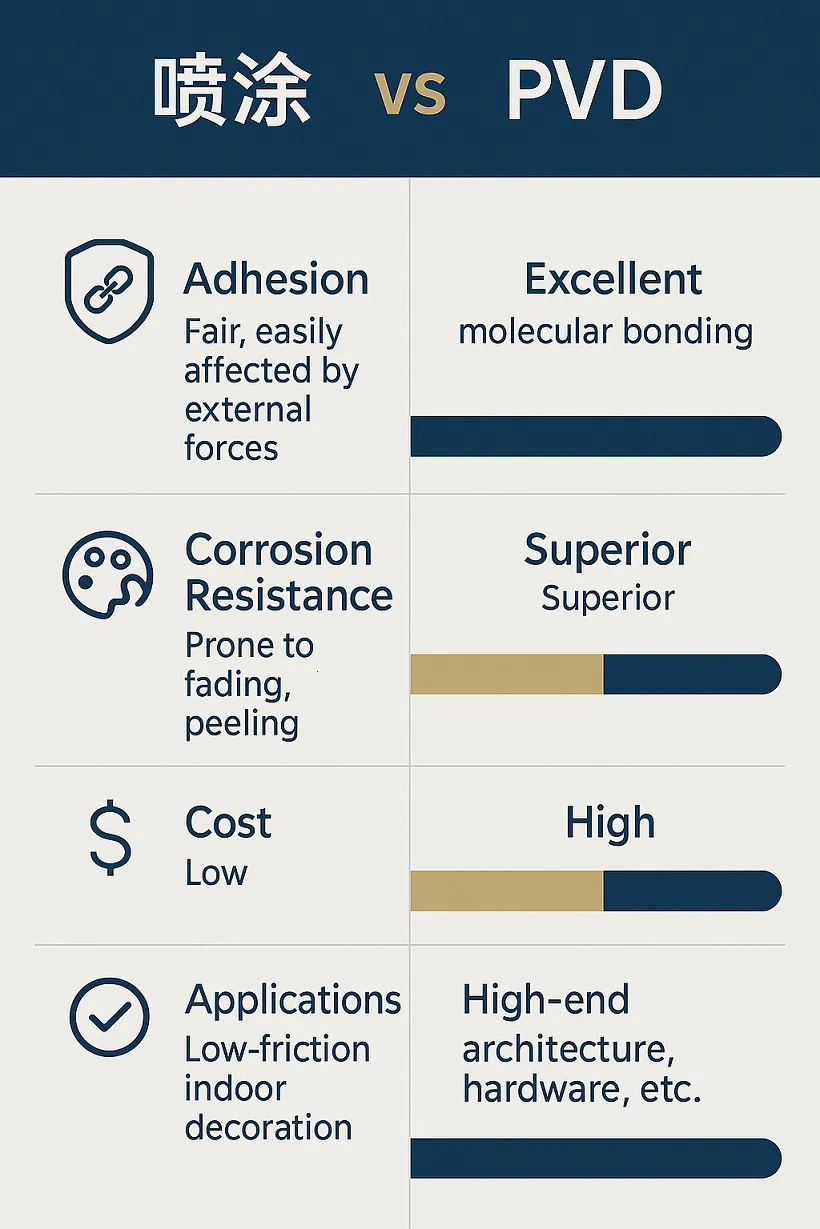
It can be seen that vacuum plating is a better solution for projects with high requirements for durability and appearance stability. Hengcai Stainless Steel recommends that customers choose a reasonable processing method based on actual use when selecting colored stainless steel coils to ensure both product aesthetics and service life.
4. Market Trend: PVD electroplated colored stainless steel coils are becoming mainstream
In recent years, the global demand for high-end building materials and environmentally friendly manufacturing processes has continued to grow, driving the widespread application and rapid development of PVD vacuum plating technology in the field of colored stainless steel coils. As an advanced surface treatment method, PVD not only breaks through the bottleneck of traditional spraying technology in terms of adhesion and weather resistance, but also meets the triple standards of the modern market for decorative materials in terms of “appearance consistency + durability + environmental performance”.
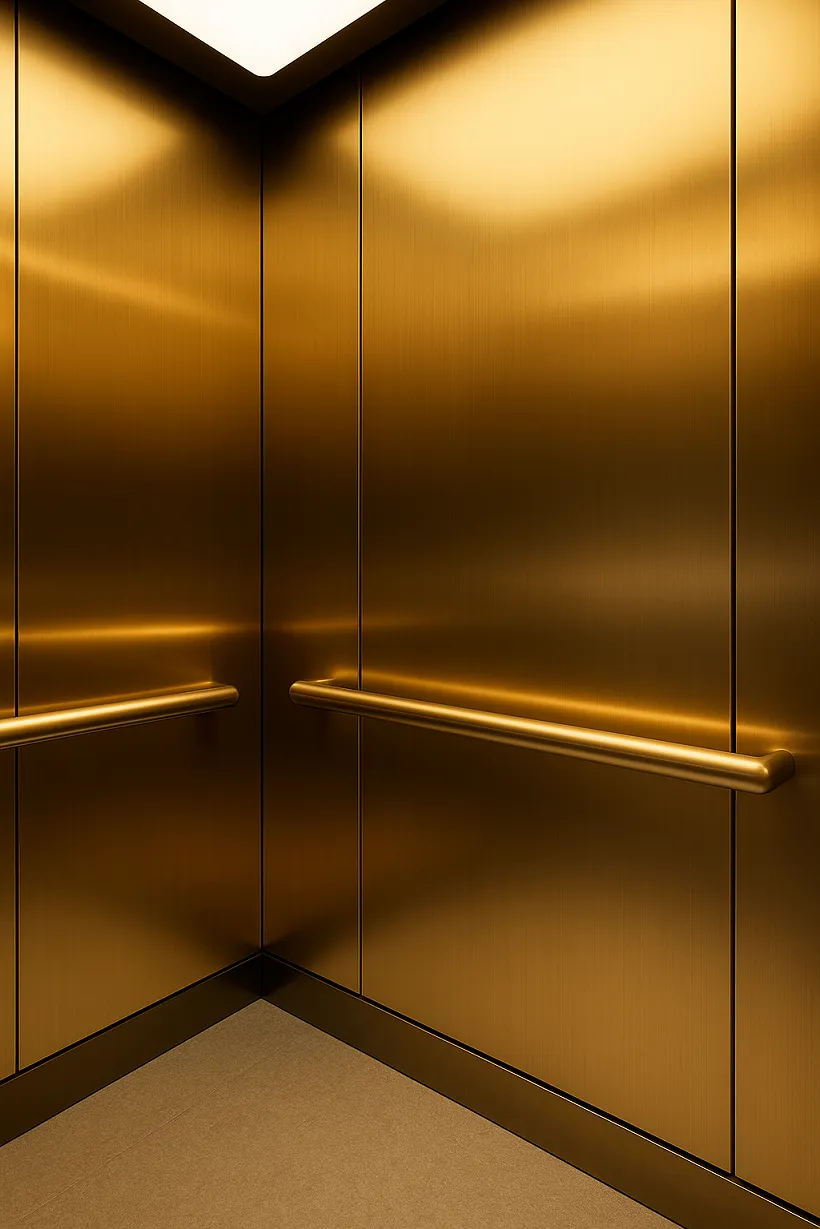
▶The global building decoration industry is transforming to high-performance decorative materials
In key export regions such as the Middle East, Southeast Asia, Europe and the United States, large commercial complexes, high-end residential and hotel projects have put forward higher requirements for the performance and texture of colored stainless steel coils. For example:
Large mosques and government buildings in Saudi Arabia and Dubai widely use black titanium brushed and gold mirror PVD panels as curtain walls or dome decorations;
Transportation facilities such as subway stations and airports in Singapore and Malaysia prefer PVD materials with strong corrosion resistance and long-lasting surface gloss;
European and American high-end customized home and kitchen system manufacturers are also gradually replacing powder spray parts with PVD to reduce VOC emissions and extend product life.
Behind these demands is the high recognition of the stability and environmental protection of the PVD process, which also brings broader market opportunities for companies like Hengcai Stainless Steel that have large-scale PVD processing capabilities.
▶The environmental advantages of PVD electroplating have become a new standard for procurement
Compared with traditional spraying processes, PVD does not require the use of organic solvents or powders, does not produce wastewater and harmful volatiles, and fully complies with green building and environmental certification requirements such as RoHS, REACH, and LEED. In Europe and North America, more and more end customers explicitly require suppliers to provide PVD material certification reports and surface performance test data in bidding documents.
Hengcai Stainless Steel has now established multiple vacuum ion plating production lines, supporting a variety of color outputs such as black titanium, champagne gold, rose gold, sapphire blue, and carbon gray. It has excellent color consistency control capabilities and batch supply stability, and can meet the needs of engineering projects with strict color accuracy and environmental audits.
▶The market is moving from “low cost” to “high quality + high added value”
Although the spraying process still exists in the low-end market due to its low cost and short processing cycle, the proportion of stainless steel coils using PVD electroplating in export orders has increased year by year according to market feedback data in the past three years. According to Hengcai Stainless Steel statistics, as of the fourth quarter of 2024:
PVD color stainless steel related orders increased by 48% year-on-year;
Customer repeat purchase rate increased to 73%;
The main applications of the products are concentrated in elevator decoration, curtain wall panels, commercial space background walls, cabinet door panels, high-end hardware and other fields.
This shows that the market is no longer just concerned with price, but is increasingly inclined to choose material solutions with higher performance and lower post-maintenance costs.
▶Jasmine Stainless Steel’s PVD layout and customer empowerment
As a stainless steel supplier that has deployed PVD finishing processing earlier in the industry, Jasmine Stainless Steel continues to invest in technology equipment and automated production lines, and has built a one-stop service system from substrate selection, surface processing, color verification, quality inspection to export packaging. At the same time, it also helps end customers with structural design suggestions, processing guidance and color selection scheme output, greatly shortening the design and development cycle.
Whether it is for architects, engineering contractors, or home improvement brands, choosing Jasmine’s PVD colored stainless steel products means choosing a more stable, more environmentally friendly, and more visually valuable material solution.
5. Summary and Suggestions
If you are considering purchasing colored stainless steel coils, please confirm the following points first:
Is the surface of the plate PVD treated?
Does it have a salt spray/fingerprint/acid and alkali resistance test report?
Is the color consistent in batches and stable for a long time?
Does it provide one-stop processing services?
Choosing a stable and reliable colored stainless steel product is not only related to the visual performance of the project itself, but also a guarantee of brand image and service life.
Jasmine Stainless Steel is willing to work with you to provide more textured and durable material solutions for global decoration projects.