 JD-STEEL
One picture to understand the production process of stainless steel mirror panel
In high-end buildings, home decoration, elevator panels, kitchenware panels and other scenes, stainless steel mirror panels are very popular in the market due to their high reflectivity, high finish and high-quality texture. But are you curious about how an ordinary matte stainless steel plate can be turned into a mirror-like shining product through a series of precise processes?
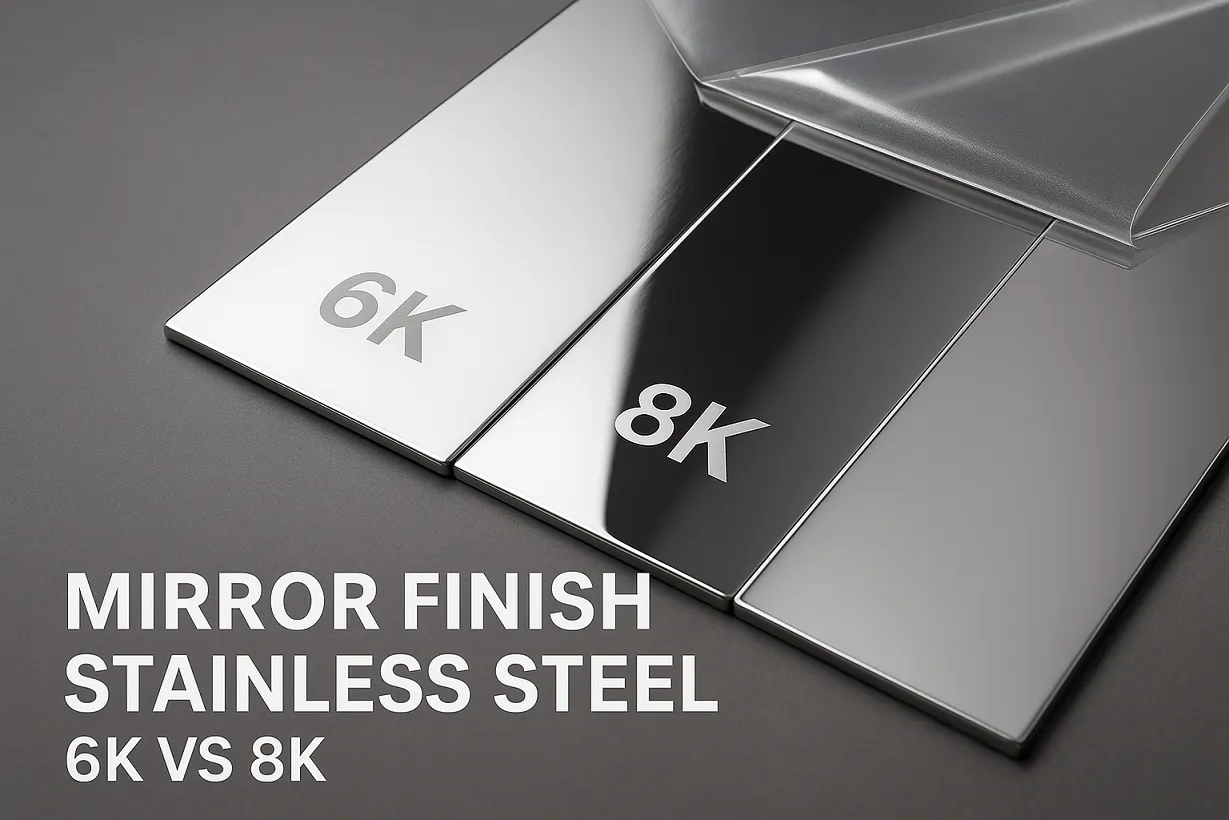
This article will take you through a picture to deeply understand the complete production process behind the stainless steel mirror panel, so that you can understand the professional manufacturing logic of the product from the source.
1. What is stainless steel mirror panel?
Stainless steel mirror panel is a kind of stainless steel decorative panel that is continuously polished to make its surface flat and smooth and produce a reflection effect close to that of a mirror. Its brightness can reach different levels such as 6K, 8K, 10K, and super mirror according to customer needs.

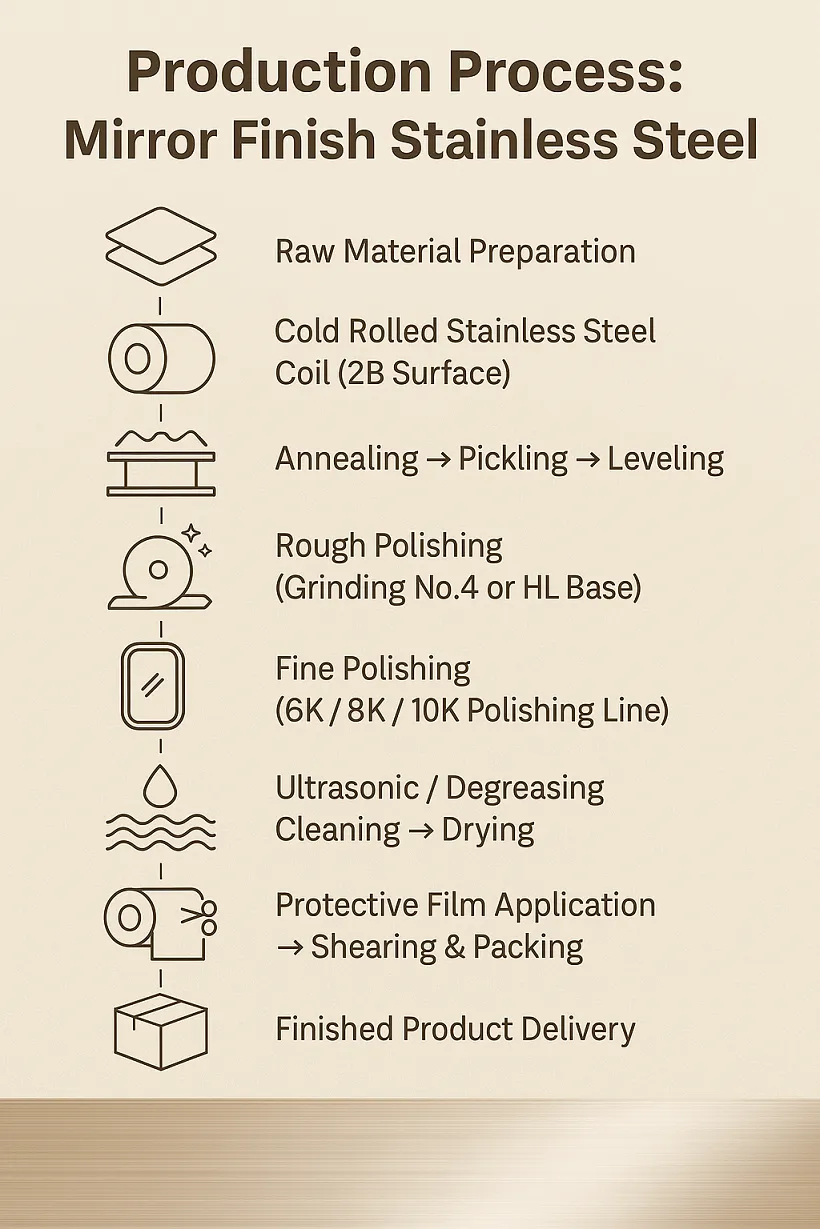
2. Production flow chart of stainless steel mirror panel
Raw material preparation
↓
Cold-rolled stainless steel mother coil (2B surface)
↓
Annealing → Pickling → Flattening
↓
Rough polishing (grinding No.4 or HL base surface)
↓
Fine polishing (6K / 8K / 10K polishing line)
↓
Ultrasonic/degreasing cleaning → Drying treatment
↓
Laminating protection → Slitting and packaging
↓
Finished product delivery
3. Detailed explanation of each process step
(1). Raw material preparation: Select high-quality mother coils
Mirror polishing requires extremely high surface uniformity and impurity control of the plate. Generally, 304 or 316L cold-rolled stainless steel coils are selected, with a surface of 2B or BA, and a thickness tolerance of ±0.02mm.
(2). Annealing + Pickling + Leveling
Annealing: Heat the cold-rolled steel coil to the recrystallization temperature to eliminate internal stress and improve toughness and ductility;
Pickling: Use mixed acid to remove oxide scale and improve surface cleanliness;
Leveling: Ensure the flatness of the entire coil through tension correction and leveling to avoid “wave patterns” in subsequent polishing.
✅ Purpose: Create a uniform and stable physical basis for polishing.
(3). Rough polishing: base leveling
Use abrasive belts (#240~#400) or abrasive grinding wheels to evenly rough polish the surface;
Eliminate the fine defects on the original board surface and form a regular base surface (such as No.4, brushed HL);
Control the flatness and roughness of the board surface to facilitate subsequent mirror improvement.
(4). Fine polishing: forming a mirror-like reflective layer
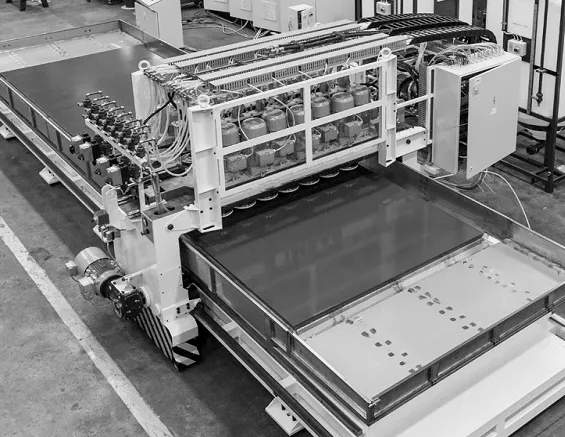
Use high-precision polishing equipment, use different particle size polishing wax and felt wheels for multi-level polishing;
The number of polishing depends on the requirements (generally 6K = two fine polishing, 8K = three, and super mirror requires more than five);
Finally, a reflective layer that is as smooth as a mirror and can be clearly imaged is formed.
The Ra (surface roughness) after polishing can reach within 0.05μm.
(5). Cleaning + drying
After mirror polishing, if wax oil residue adheres to the surface, it needs to be removed by ultrasonic cleaning or solvent degreasing.
After cleaning, use hot air drying or natural drying to ensure that there are no water spots or particles adhering to the board surface.
(6). Film protection + slitting packaging
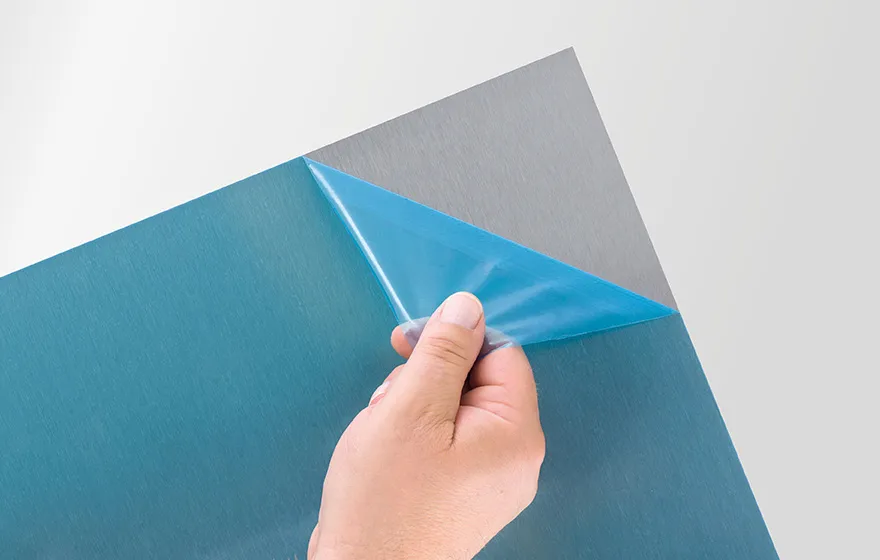
Apply high-temperature scratch-resistant protective films (such as PE or PET films) on the surface to prevent scratches during transportation or processing.
Cut into plates according to the customer’s size requirements (1220×2440mm, standard);
Packaging, warehousing or shipping.
✅ Note: Some customers require that the mirror panel be suitable for laser cutting or bending. Different membrane materials should be used according to the application.
4. Summary of Key Technical Points of Mirror Panels

Only when all these links are well controlled can stainless steel mirror plates with no ripples, no scratches, no fogging and clear reflection be produced.
5. Conclusion: Mirror-finished stainless steel, the technology behind the luster
The charm of mirror-finish stainless steel lies not only in its luster but also in every meticulous process hidden behind it.
From raw material selection to the final shipment, the entire production process embodies the craftsmanship spirit of precision manufacturing and the systematic nature of modern industry.
At Hermdeco Steel Industry, we not only master the full-process control capability of mirror panel processing, but also can provide customized services such as 6K, 8K, super mirror, and mirror titanium gold according to customer needs. Welcome to contact us for free samples or technical consultation.